


I recently had a new adventure in videography. I haven’t always been interested in videography, but I picked it up along the way, mostly because life demanded it during the pandemic. I have long enjoyed photography, and for a while, I enjoyed taking photos as a hobby, including winning multiple blue ribbons at the Montgomery County Fair before we moved to Georgia. One day, I’ll take it up again in earnest, but for now my iPhone is more than enough. The iPhone is so good at what it does that I didn’t even take a standalone camera on most of our recent trips. The same is true of shooting video. The new phones are so good, they make it easy, and as Apple proved, they are good enough to film an entire commercial!
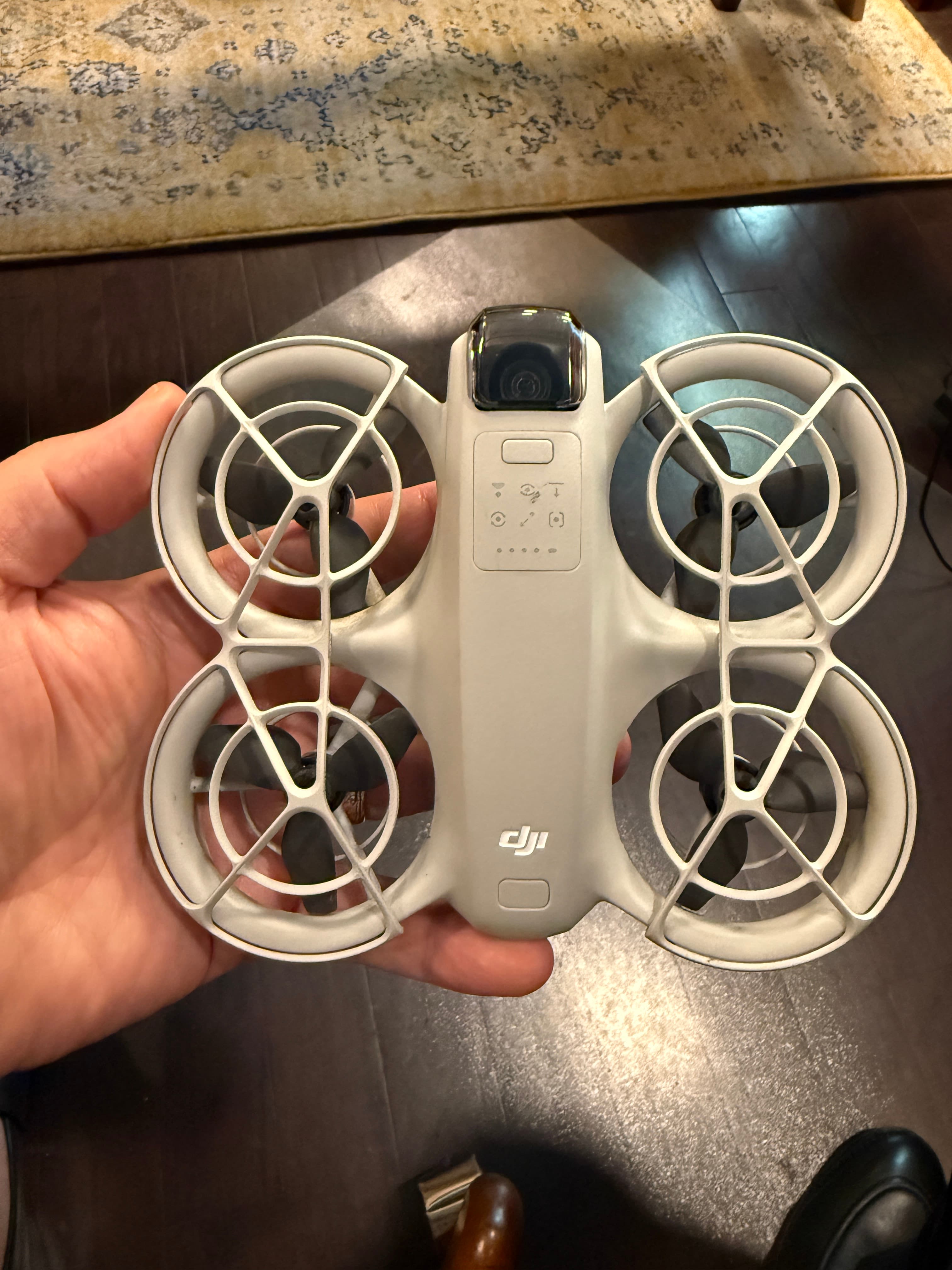
But iPhones can’t go everywhere I want to go, so I got out the drone. Yes, Christ Church has its own photography drone. After we hired a drone photographer once, we realized we could buy a basic drone for a fraction of what we paid ($300), and it paid for itself the first time we filmed our own footage. Every time we’ve used it since, it's become an even better investment! So, as I have been getting shots for the Annual Fund, I have used the drone to get some fun shots to make our videos more engaging. So far, it has worked. The first video drone footage wasn’t as good as I had hoped, as I tried to simulate blowing wind, but it got the point across with a bit of support from sound effects.
Anyway, I was enjoying filming some other things this week when I had a problem I have long dreaded. I was flying the drone on church grounds (I don’t want to spoil the upcoming videos), and because of the angle of the sun, I lost track of exactly where it was. I can see what it is seeing out the front through my iPhone, which attaches to the remote controls, but I can’t see behind it when I’m flying it backward. I thought I knew where it was, but I misjudged, and before I knew it, I hit some branches, and the drone fell. That wasn’t new. That’s part of flying the drone – it happens periodically. The problem this time was that I couldn’t find it. I could see what it was seeing: some leaf litter, and some kind of plant that it was nestled up against. It was so close up, there was no context to narrow it down.
I looked everywhere I thought it should have fallen, but couldn’t find it. It has GPS, so I knew about where it was, but that didn’t help me locate it. I looked at one of the menus in the software and saw it had a “find your drone” feature that included emitting a sound to help you locate it. At first, that didn’t help much either. I could hear it, but it wasn’t helping me zero in. Until I looked up. Thirty feet over my head, our little mini-drone was perched on one of the huge limbs of a majestic live oak. I couldn’t see it, but I could hear it up there, and I was at a loss as to how I was going to get it down.
It’s rare for me to hit things flying forward. Most of the time, if I have trouble, it’s when I’m flying backward. Not only can’t I see on the display, but if I am physically watching the drone, the controls are opposite. My brain says it should go left, but pushing left on the remote makes it go right. I just get confused and don’t really know which way to go. That reality keeps me thinking about the collect we prayed a couple of weeks ago. One of the things I pointed out in a sermon is that we prayed for God’s grace to go before us and come after us. I said that it is a gift to move ahead into God’s grace, knowing God goes with us, but even when we turn in fear or rebellion or whatever, we still can’t get beyond God’s grace. Nonetheless, I think it’s easier to run into trouble when we’re turned away or running away from God’s hopes and intentions for us.
Going forward can be plenty scary, as I know well enough. Sometimes it is the comfort of where we’ve been, and the familiarity of something, that draws us back. Even if that thing isn’t healthy for us, or at least doesn’t help us grow more fully into the stature of Christ. We want to believe we can go back or at least stay the same, but that doesn’t work. For us or for drones. Drones, in particular, have a short battery life. You can hover, but not for that long. One way or the other, you’re going to come down. Going backward seems like the right call. It seems like we know the way. Except we can’t ever undo what we have learned or come to know, and going backward opens up an entirely new unknown no matter what we do.
Kierkegaard has famously pointed out that life can only be understood backward, but it must be lived forwards. We learn as we go, and we have to experience something to learn from it. But we can’t dwell there or stay there (like Peter, who wanted to preserve the moment of Jesus Transfiguration). We have to live in the present as we keep moving ahead. For those in my generation, this also echoes the wise and whimsical Willy Wonka, who also reminded us all of the same truth when instructing his concerned guests, “Oh, you can’t get out backwards. You’ve got to go forward to go back.” Fitting advice for an allegory about a bunch of people called into unhealthy patterns that cost them dearly.
I did get the drone back, if you’re wondering. I got the drone to try to take off from the limb, which it couldn’t really do (I figured it was worth a try). But in trying to take off, it shifted enough to fall from the limb to the ground, where I could retrieve it. I have learned not to take it for granted that I can take the same flight path in reverse. I’ll remember to just rotate the drone and “watch” as I fly forward, even as I return it to its starting place. Our drone isn’t smart. It can’t stop itself from hitting things the way we can. It doesn’t have a sophisticated return-home capacity, although it can find its way back in clear skies with no obstructions. But how often are we free of obstructions on this island? Or in our lives. Not very often, which is the point.
