The Couper and Wylly Families
The Couper and Wylly families, connected by marriage and civic leadership, shaped the history, agriculture, and culture of St. Simons Island and inspired characters in Eugenia Price’s historical novels.
.jpg)
The Couper and Wylly families, connected by marriage and civic leadership, shaped the history, agriculture, and culture of St. Simons Island and inspired characters in Eugenia Price’s historical novels.
The Couper and Wylly families were closely connected by marriage and friendship, with many members buried in adjoining plots at Christ Church Frederica. Their names and stories appear in Eugenia Price’s historical novels, including the St. Simons Trilogy and the Georgia Trilogy.
John Couper, a Scottish immigrant and early resident of St. Simons, became a prosperous merchant, planter, and civic leader. With his wife, Rebecca Maxwell Couper, he established Cannon’s Point Plantation, cultivating Sea Island cotton and a renowned olive grove on President Jefferson’s advice. Their son, James Hamilton Couper, a Yale graduate and accomplished agriculturist, expanded the family plantations, amassed a significant library, and helped design Christ Church, Savannah.
We honor the men and women who were enslaved by the Couper and Wylly families and who labored against their will in the harsh conditions of coastal Georgia. Though their names do not appear on these memorials, their lives and labor are an essential part of these families' histories. Between them, their plantations relied on the work of more than 100 slaves to cultivate cotton and food crops.
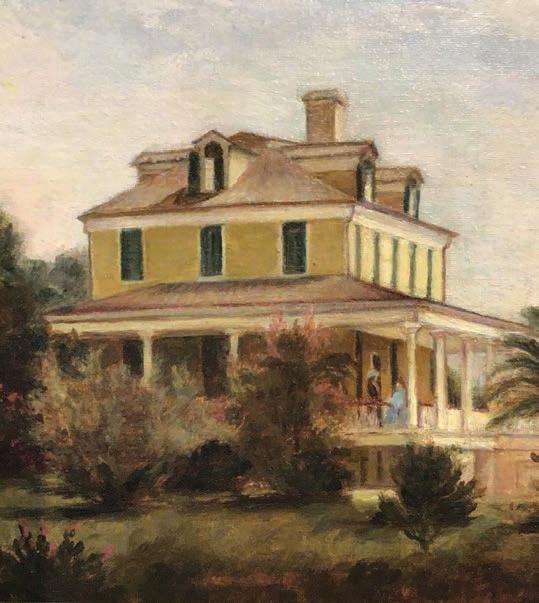
Painting of Cannon’s Point Plantation House (John Couper’s), by his grandson John Lord Couper, circa 1860. John Couper built this house by 1804 and lived here with his wife, Rebecca, and their five children throughout the antebellum era. Among the first notable visitors to the home was Vice President Aaron Burr who sought refuge in Georgia following his infamous duel with Alexander Hamilton.
Caroline Wylly, daughter of Alexander Campbell Wylly and Margaret Armstrong Wylly, married James Hamilton Couper, linking the families. Members of both families served in local government, the legislature, and their estates played a central role in the development of St. Simons. The family’s Italian marble gravestones mark generations of Couper and Wylly descendants, including prominent civic leaders and figures celebrated in literature.
.jpg)